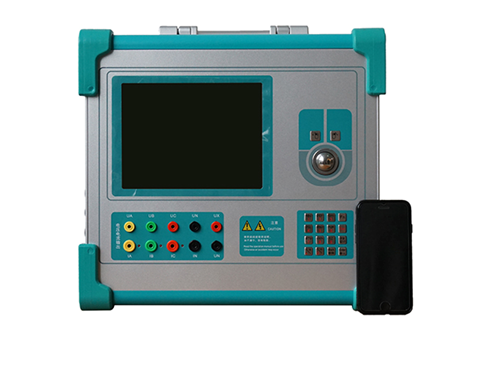


Online cable switchgear CTPT testing is a specialized technique used to detect the performance of current transformers (CT) and voltage transformers (PT) in cable switchgear. Through this testing, the health of the transformers can be assessed, potential faults can be prevented, and the stable operation of the power system can be ensured. Below is an overview of an article about online cable switchgear CTPT testing:
Online Cable Switchgear CTPT Testing: The Key to Ensuring Stable Operation of Power Systems
Abstract
This article introduces the basic concepts, importance, testing methods, and technical key points of online cable switchgear CTPT testing, aiming to help maintenance personnel of power systems better understand and implement this testing to ensure the safe and efficient operation of power systems.
Introduction
As an important component of the power system, the normal operation of cable switchgear is crucial for the entire power network. Current transformers (CT) and voltage transformers (PT) are key components in switchgear, and their performance directly affects the safety and reliability of the power system. Therefore, regular online CTPT testing is very necessary.
Importance of CTPT Testing
Fault Prevention: Early identification of potential problems in transformers to prevent sudden failures.
Performance Evaluation: Accurately assess the working status of transformers to ensure their performance meets standards.
Maintenance Planning: Develop reasonable maintenance plans based on test results to reduce unnecessary maintenance costs.
Safety Enhancement: Enhance the overall safety of the power system by improving the reliability of transformers.
Testing Methods
Excitation Characteristic Test: Measure the excitation current of the transformer by applying different voltage levels to evaluate its excitation characteristics.
Excitation Parameter Test: Obtain the excitation curve of the transformer and calculate excitation parameters such as excitation resistance and excitation reactance.
Ratio Test: Verify whether the actual transformation ratio of the transformer is consistent with the nameplate data.
Ratio Error Test: Measure the deviation between the actual transformation ratio and the rated transformation ratio.
Polarity Test: Confirm the consistency of the output and input directions of the transformer.
Coil Resistance Test: Measure the DC resistance of the transformer coil to determine if there is a short circuit or open circuit.
Hysteresis Loop Test: Draw the hysteresis loop to analyze the magnetization performance of the iron core.
Technical Key Points
Testing Equipment: Use a dedicated CTPT analyzer for testing.
Testing Environment: Ensure the testing environment meets safety requirements and avoid interference.
Testing Frequency: Develop a reasonable testing cycle based on equipment operating status and historical records.
Data Analysis: Evaluate the health of the transformer through analysis of test data.
Result Recording: Record test results in detail to provide a basis for future maintenance.
Implementation Steps
Preparation: Ensure the testing equipment is in good condition and understand the basic information of the transformer under test.
Safety Measures: Execute necessary safety procedures such as power outage, voltage verification, and grounding.
Connecting Equipment: Connect the testing equipment to the transformer according to the correct connection method.
Executing Tests: Conduct various tests according to the test plan.
Data Analysis: Collect test data and perform analysis and comparison.
Report Preparation: Write a test report and provide maintenance recommendations.
Conclusion
Online cable switchgear CTPT testing is a crucial maintenance activity that contributes to the stable operation of power systems. By regularly implementing CTPT testing, the occurrence of faults can be effectively prevented, ensuring the continuity and safety of power supply.
Please note that this is only an overview article framework. If you need more detailed technical parameters, testing steps, or purchasing suggestions, please refer to the manufacturer's provided materials or consult professionals in the relevant field.