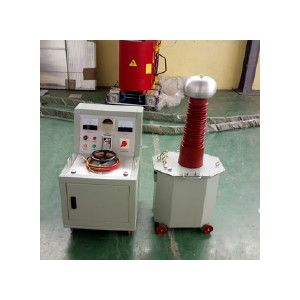
used for monitoring and analyzing partial discharge phenomena in power equipment. Partial Discharge (PD) refers to localized, transient discharge phenomena occurring in the insulation system of high-voltage equipment, which may lead to gradual deterioration of insulation materials and ultimately equipment failure. Below is an overview of an article about the three-channel partial discharge tester:
Three-Channel Partial Discharge Tester
Introduction
The three-channel partial discharge tester is a professional instrument used for partial discharge detection in power equipment. Compared to single-channel testers, the three-channel tester can simultaneously monitor three different signal sources, providing more comprehensive data analysis.
Working Principle
The working principle of the partial discharge tester is based on capturing and analyzing signals generated by partial discharges. The three-channel partial discharge tester mainly includes the following key components:
Sensors: Used to capture signals such as electromagnetic waves, acoustic waves, or electrical pulses generated during partial discharges.
Preamplifier: Amplifies the weak captured signals to a detectable level.
Filters: Select signals within specific frequency ranges to eliminate interference.
Main Amplifier: Further amplifies the signals to a level suitable for display and analysis.
Display Unit: Displays graphical and numerical information of discharge pulses.
Data Analysis Software: Used to process and analyze the collected data.
Technical Features
Multi-channel detection: Capable of simultaneously monitoring partial discharge signals in three different frequency ranges, improving detection accuracy and reliability.
Large-screen oscilloscope tube: Provides clear waveform display for easy observation and analysis.
Wide dynamic range: Can handle a broad range of signal intensities, from weak to strong.
Diverse frequency band combinations: Offers multiple frequency band combination options, suitable for different types of partial discharge detection.
Auxiliary zero-marking system: Helps precisely locate the time and position of discharge occurrences.
Strong anti-interference capability: Utilizes advanced anti-interference technology to ensure reliable detection results even in complex environments.
Usage Method
Connect sensors: Properly connect the sensors to the tester.
Set parameters: Adjust the tester's parameters as needed, such as gain, filtering range, etc.
Start detection: Start the tester to begin capturing partial discharge signals.
Data analysis: Analyze the captured data through built-in software to identify discharge types and locations.
Report generation: Generate detailed detection reports based on the analysis results.
Application Scope
The three-channel partial discharge tester is widely used in the maintenance and detection of power systems, especially for partial discharge detection in power equipment such as transformers, cables, switchgear, and generators.
Precautions
Safe operation: Ensure all operations comply with safety regulations to avoid electric shock risks.
Environmental factors: Consider the impact of ambient temperature, humidity, etc., on test results.
Interference sources: Minimize the influence of external interference sources, such as electromagnetic interference.
Regular calibration: Ensure the accuracy and reliability of the testing equipment by performing regular calibration.
Technical Specifications
Frequency range: Typically covers a frequency range from tens of kilohertz to hundreds of megahertz.
Sensitivity: Capable of detecting very small discharge signals.
Linearity: Ensures good linear response across different discharge magnitudes.
Measurement range: Provides multiple ranges for users to select, adapting to different testing needs.
Conclusion
The three-channel partial discharge tester is an important tool in the power industry for preventing and diagnosing partial discharge issues in electrical equipment. Through early detection of partial discharge phenomena, it can effectively avoid equipment failures and damage, thereby ensuring the stable operation of the power system.
The above is an overview of the three-channel partial discharge tester. If you need more detailed information or suggestions on specific application scenarios, please feel free to let me know.