China is rich in mineral resources and has a large number of workers engaged in production operations. However, due to immature technology, safety measures in many mines are not in place, and accidents still frequently occur, posing significant threats to workers' lives and causing major economic losses to society and enterprises. Therefore, improving mine production supervision capabilities and ensuring personnel safety are important tasks in China's mine production.
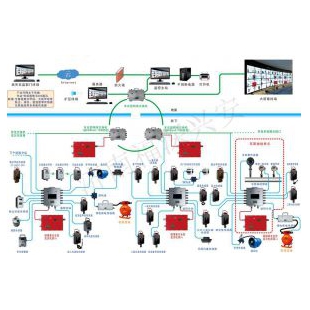
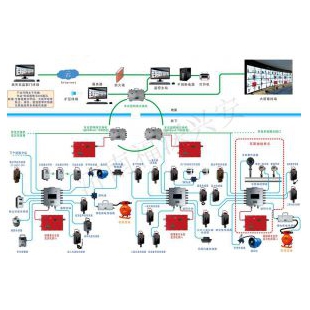
The emergence of safety monitoring systems has effectively solved this problem.Taking the mine monitoring system_mine monitoring management system produced by Jinan Fushen Technology as an example, this system can effectively monitor parameters such as gas, temperature and humidity, dust, pressure, and current inside the mine, monitor production equipment, and can issue alarms and power-off processing, which plays a significant role in ensuring mine safety production. Currently, the mine monitoring system has been well used and promoted.
The Fushen mine monitoring system mainly has the following functions:
Monitoring mine status
Monitor various parameters underground, such as environmental parameters like methane, gas, smoke, wind speed, temperature and humidity, water level in sumps, start/stop status of electromechanical equipment, and electrical parameters like voltage and current.
Monitoring data over-limit and automatic control functions
When the monitored underground parameters exceed limits, the system automatically alarms and performs safety operations such as power-off underground. When the system host and cables fail, these operations can also be completed by underground equipment.
Remote control of equipment
Management personnel can use computers to remotely control underground equipment. For example, when a certain environmental indicator exceeds the limit, staff can cut off the power supply in a specific area through the system, and then restore power when the indicator returns to normal.
System self-check
When monitoring substations, sensors, transmission cables, actuators, etc. in the system malfunction, the system will automatically alarm and record fault time, faulty equipment, and other information for maintenance personnel to use.
Data storage
The system records real-time data collected, including monitoring values of underground parameters, equipment start/stop times and status, alarm and alarm release times and status, equipment fault and recovery times and status, etc., establishing a comprehensive system database to provide users with detailed data.
Data statistical analysis
The system can query and statistically analyze collected data, generating various reports and charts.