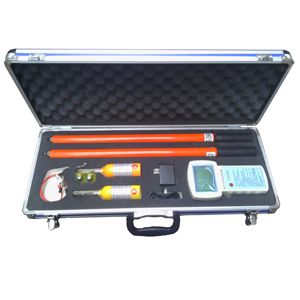

As a core equipment in the power system, the health of transformers directly affects the safe and stable operation of the power grid. Partial Discharge (PD) is one of the important causes of insulation aging in transformers. Therefore, it is very necessary to use a handheld transformer partial discharge tester for regular inspections. This article will introduce the basic operating procedures and technical key points of the handheld transformer partial discharge tester.
Introduction to Handheld Partial Discharge Tester
The handheld partial discharge tester is a portable instrument that integrates multiple detection technologies, mainly used for on-site rapid detection of partial discharge phenomena in power equipment (especially transformers). Common detection technologies include:
Ultrasonic Detection (Acoustic / Ultrasonic)
Transient Earth Voltage (TEV) Detection
Ultra High Frequency (UHF) Detection
These technologies can capture different types of partial discharge signals, thereby helping to assess the insulation condition of transformers.
Pre-operation Preparation
Understand the equipment: Familiarize yourself with the functional modules and operating interface of the handheld partial discharge tester.
Safety preparation: Ensure that personal protective equipment is complete, such as wearing insulating gloves, safety helmets, etc.
Environmental check: Ensure that the testing environment meets safety requirements and stays away from high-voltage areas.
Calibrate the instrument: Calibrate according to the instructions to ensure the accuracy of test results.
Operating Steps
Power-on self-check: Turn on the tester power and execute the power-on self-check program.
Select detection mode: Choose the appropriate detection mode based on the actual situation, such as ultrasonic detection or UHF detection.
Set parameters: Adjust detection frequency, sensitivity, and other parameters according to testing requirements.
Start detection:
For ultrasonic detection, place the probe close to the transformer casing and move it slowly along the transformer surface to search for abnormal signals.
For UHF detection, place the receiving antenna near the transformer, being careful not to touch live parts.
Record data: Once abnormal signals are found, record them immediately, including location, intensity, and other information.
Comprehensive analysis: Analyze the collected data comprehensively to determine the degree of partial discharge and its possible causes.
Generate report: Use the built-in software of the tester or external computer software to generate a detailed test report.
Precautions
During testing, pay special attention to personal safety to avoid electric shock accidents.
Minimize external interference during testing, such as mobile phone signals and other electronic devices.
If abnormal signals are detected, immediately stop using the transformer and contact professionals for further inspection and handling.
Keep the tester clean and dry, and avoid prolonged exposure to harsh environments.
Regularly maintain the tester to ensure it is in good working condition.
Conclusion
The handheld transformer partial discharge tester is one of the important tools for maintaining the safe operation of transformers in the power industry. By following the above operating guidelines, you can effectively use this instrument for partial discharge detection of transformers, promptly identify potential problems, and ensure the stability and reliability of the power system.
Please adjust this guide according to your actual needs and the specific model of the handheld partial discharge tester you are using. If you have any questions or need technical support, please consult the manufacturer or professional technical personnel.