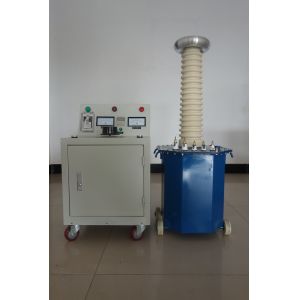
A transformer partial discharge tester is a professional device used to detect partial discharge phenomena inside transformers, which is crucial for assessing the insulation condition of transformers and predicting potential faults. Below is an outline of an article about the transformer partial discharge tester:
Transformer Partial Discharge Tester: Principles, Usage, and Maintenance
1. Introduction
Background: With the increasing complexity of power systems, monitoring the health of power equipment has become more important.
Role of the Transformer Partial Discharge Tester: The transformer partial discharge tester helps technicians promptly detect partial discharge issues inside transformers, which is significant for preventing major accidents.
Research Purpose: This article aims to introduce the working principles, usage methods, and applications of the transformer partial discharge tester in power system maintenance.
2. Working Principles
Detection Techniques: Transformer partial discharge testers typically use technologies such as Ultra-High Frequency (UHF), Ultrasonic (US), and Transient Earth Voltage (TEV) to detect the magnitude of partial discharge.
Signal Processing: Through built-in or external multiple sensors, signals such as electromagnetic waves and acoustic waves generated by partial discharge are received, and after complex signal processing techniques, the magnitude and specific location of partial discharge inside the transformer are accurately and effectively diagnosed.
3. Usage Methods
Startup Preparation: Ensure the instrument is properly grounded, connect to a 220V power supply, and set the display mode to "Ellipse" (default).
Discharge Calibration: Before applying the test voltage, use a calibration pulse generator to calibrate, ensuring detection accuracy.
Adjusting Gain: Adjust the amplifier gain knob so that the injected pulse height is appropriate (about 2 cm on the oscilloscope screen), making the digital voltmeter reading match the known injected charge.
High-Voltage Test: Turn on the power of the high-voltage test circuit, slowly increase the test voltage, and note the first occurrence of continuous discharge; this voltage is the partial discharge inception voltage.
Scanning Detection: Use the instrument to scan different parts of the transformer; through earphones, obvious discharge sounds can be heard, and the screen amplitude curve rises.
Locating Discharge Points: Repeatedly measure the tested position from different angles to eliminate environmental noise interference, and use the laser locator built into the partial discharge detector to determine the specific location of the discharge point.
Saving Results: After confirmation, save the test results for later management, analysis, and targeted maintenance.
Parameter Settings: Set output voltage, units, reading settings, discharge count, and sensors as needed.
4. Maintenance and Care
Daily Maintenance: Keep the instrument clean and dry, and avoid prolonged exposure to extreme temperatures or humidity.
Regular Calibration: Calibrate at intervals recommended by the manufacturer to ensure measurement accuracy.
Storage Conditions: When not in use, store in a dry and ventilated place to avoid moisture.
Precautions: Follow the safety guidelines in the operation manual to avoid safety accidents in high-voltage environments.
5. Application Cases
Case Description: Introduce a specific case of using a transformer partial discharge tester for detection, including the detection background, process, and results.
Result Analysis: Analyze based on the detection results, pointing out existing problems and possible causes.
Improvement Suggestions: Propose improvement measures or maintenance recommendations to enhance transformer performance.
6. Conclusion and Outlook
Summary: Review the importance and implementation process of the transformer partial discharge tester.
Future Trends: Discuss the development trends of transformer partial discharge tester technology, such as intelligence and miniaturization.
7. References
Related Literature: List the relevant academic papers and technical reports cited in this article to provide readers with resources for further learning.
Please adjust or supplement the above outline according to your specific needs. If you need more detailed content or have other specific requirements, please let me know.