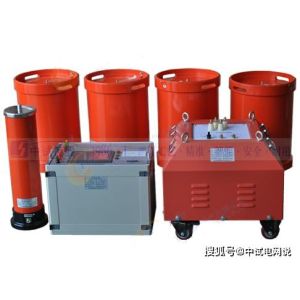
Dual-channel digital partial discharge detector is a precision instrument specifically used to detect partial discharge phenomena in power equipment. This instrument plays a crucial role in the maintenance and fault diagnosis of power systems. Below is an article summary about the dual-channel digital partial discharge detector.
Dual-Channel Digital Partial Discharge Detector: Principles, Applications, and Advantages
Introduction
Partial discharge is a phenomenon caused by tiny defects in insulating materials within power equipment. This phenomenon may gradually develop into serious insulation faults, thereby affecting the safe operation of the entire power system. Therefore, dual-channel digital partial discharge detectors are widely used in condition monitoring and fault prediction of power equipment.
Basic Principles
The basic principle of the dual-channel digital partial discharge detector is to use pulse current as a medium to effectively collect discharge phase information. In the specific implementation process, traditional measurement methods mainly include broadband and narrowband measurement methods. Although the broadband detection method has higher resolution and can obtain richer information, it is also more sensitive to noise; while the narrowband detection method is better at extracting effective signals in complex noisy environments.
Main Features
Dual-channel measurement: Capable of simultaneously monitoring two different signal sources, facilitating comparative analysis.
High sensitivity: Can detect very weak partial discharge signals.
Wide applicability: Suitable for various types of power equipment, including transformers, cables, motors, etc.
Multiple frequency band combinations: Provides multiple frequency band combination options to adapt to different types of discharge patterns.
Intuitive data display: Uses both pointer-type and digital-type meters for simultaneous display, facilitating observation and recording.
Convenient data management: Can store data or download it to a computer via an interface for further analysis.
Application Fields
Power equipment maintenance: Used to monitor and evaluate the insulation status of power equipment.
Fault prediction and diagnosis: Helps predict and locate potential insulation faults.
Scientific research and teaching: Used for in-depth study of partial discharge phenomena in scientific research and educational fields.
Usage Steps
Equipment preparation: Ensure the detector is in good condition and complete necessary calibration.
Connecting equipment: Correctly connect the detector to the power equipment under test.
Parameter setting: Set corresponding detection parameters according to the characteristics of the equipment under test.
Data acquisition: Start the detector for data collection.
Data analysis: Analyze the collected data to identify the type and location of partial discharge.
Report writing: Organize the analysis results and write a detailed detection report.
Precautions
Safety measures: Always follow relevant safety regulations when conducting tests.
Environmental factors: Pay attention to the impact of environmental noise, and try to conduct tests in a relatively quiet environment.
Regular calibration: Regularly calibrate the detector to ensure measurement accuracy.
Conclusion
The dual-channel digital partial discharge detector, with its high sensitivity and multifunctionality, has become an important tool for power equipment maintenance and fault diagnosis. Through regular detection and analysis, sudden failures of power equipment can be effectively prevented, ensuring the stable operation of the power system.